Sunday, November 5, 2006

Restore System Identifier

paper hartus Women-tree, "a dream deferred for ever? Album

"... she was born to the obvious need to read the flight, and the hidden track, taking it to light. And all of it carved by the light of the Andes, has added to the gift of loyalty to place Indian race ... " Gabriela Mistral.

"... Oh
hard and soft hand and claw jasmine, delicate india
hand tame or fierce creature who knows if sculpture

salute your big and tall like you Altiplano "Rafael Alberti


Gabriela Mistral called" Bolivian great "Rafael Alberti wrote a poem in 1959:" ... Dream wood: / guayacán is tame and excited, / and is tenderness village, / spirit of cloud messenger / or heavenly nude Madonna, / blood veins Bolivian sweet ... "

Considered one of the great sculptors has been Latin America. His works are characterized by a delicate curves and volumes and an incredible ability to use granite, alabaster, basalt and onyx black, and different woods.

"His creations are dominated by human emotions, the presence of mountains and maternity as a woman not lived and moved in each of its parts, such dedication and love that is making them, their children" says curator Cecilia Baya.

Marina Nunez del Prado was born in La Paz in 1910. Studied at the National School of Fine Arts between 1927 and 1929. Then, has served as professor of the departments of sculpture and artistic anatomy at the same university (1930-1938).

Throughout his life performed about 163 shows in different countries. Bolivia was the first artist invited to participate of the Venice Biennale (1952-1959). His creative work is rewarded and shown worldwide. In his travels

met leading personalities. Including Gabriela Mistral, who strikes up a friendship free. Whose

writes in the autobiography called "Eternity of the Andes", "I have the idea that blind people go through life as a castaway clinging to hope, hope of light. I am obsessed with the thought, the river trip and moreover, the journey of the underground rivers, which all ue the complaint is a remote rumor. All waters on a course are single parent going to the deep sea. The blind and the rivers I think it will always with outstretched hands, groping in the life of its destinations.

Sometimes, both blind as the rivers meet and walk some distance together, then separated, because the light and the sea must enter alone.

All these thoughts a little strange, come to mind when I recall my knowledge and friendship with Gabriela Mistral.

Since my teens I learned the hard and bitter beautiful language of the great poet. (...) Gabriela arouses in me a passionate admiration and maternal sweet poems have flooded me in a silent cry of tenderness. She and Santa Teresa, are my favorites.

Gabriela strong ties bind me and invisible: the cosmic tremor, a psychological force I seem to come from the mountains, an insatiable craving for motherhood and the constant flow from the side of tenderness and love.

(...) As is known by everyone. Gabriela was chosen to receive the Nobel Prize for Literature and was back in Sweden after receiving the universal homage, and was a few days in New York. Take notice of this event, all women of the metropolis organziaciones banded together to offer their admiration and affection. There were many speeches, and then listen to all the slow, calm voice of Gabriela, a woman who, not wanting her, she was impressive as a solid and serene mountain.

At the end of every speech, someone had the initiative to ask for his autograph, and suddenly, hundreds of people were in a long and noisy queue. When my turn came, I saw the hands of Gabriela tired of both sign and approaching as I could, I said, "I want to just shake his hand." She lifted her head and smiling asked me who I was, and before I could articulate my response, the President of the American Women's Union (UMA), Dona Evangelina Vogn, said: "It is Marina Núñez del Prado, the sculptor." Gabriela looked at me intensely and said: "Had it not been a teacher and poet wanted to be a sculptor, I collect figures of his Madonnas that appear in magazines, I do not remember his name, but Bolivia is. The President of the AMU was quick to explain, saying: "Marina is from Bolivia and is called the statues of Madonnas".

Gabriela stood up and hugged me and expressed their desire know my studio and see about my Madonnas.

Without further explanation he said goodbye to all the ladies and left his autograph expert arm toward the study. Once he stroked one by one the Madonnas, felt so comfortable that Charles and Charles, remained until the next day, luckily the study was part of the department in which he lived, so I could give my wonderful friend a bed for rest.

I had the happiness of attending Gabriela on many occasions. In 1952, when I went to Europe to exhibit at the Venice Biennale, invited me to spend some time at his home in Naples, Gabriela was Consul for life in Chile and lived closely attended by my dear friend, the American poet Doris Dana, young, beautiful, cheerful, intelligent and comprehensive. With both shared unforgettable moments. "

Navy has in his memoirs that small playing with his brother William to" catch-fishing, "the woman claimed to be a tree of a circus that traveled around the world.

By Gabriela Mistral .- The case of Marina Nunez del Prado is still that of an immediate success in every country that has the grace receive when she landed with his family or tribe of figures, groups or wider compositions that state a creator worthy of big time.
The sudden and definite conviction that his work gives us, perhaps stems from this fact: it sculpts the faces of its people, she has no denying or avoiding dalliance in the face of their race, instead of this she says (...) loudly caste
think all this watching, by grace, working with Marina Nunez del Prado. (...) This is the case of absolute vocation, born creator, adding that the most rigorous craft consciousness. Without fanfare, in the hot silence called inspiration, casting glances toward model, which in turn is the right hand witch, Marina commission fulfills its natural and supernatural turn a face, a torso or entire body. As in myth, she was born to the obvious need to read the flight, and the hidden track, taking it to light. And all of it carved by the light of the Andes, has added to the gift of place loyalty to the indigenous race. (...)

Mariana frequents the highlands, he became her eyes and her eyes and she generously returned as received. There is his magical offspring of men, women and children, and the most beautiful animal that has seen the light the flame with pre-Raphaelite portrait neck and eyes of Madonna.
(...) In their conversation, another of his gifts, she faces tragedy just as happy without dazed as ever, with an invariable and pious serenity (...) His serenity seems to come from many occurred and multitude of creatures and things seen and deployed by the pupil shrewd and even magic, the artist, among other things, is the elusive secret calador witch we call face.
still runs through the world-or some of its corners, the prejudices of the sculptor in front of a woman flagging art such as sculpture, demand forces. It is likely that the public thinks of their presentations before the so-called "indigenous groups" or "Mother Earth" that rolled in a sort of Valkyrie wielding an arm and a stunning hand ... And there is no such magnificent frieze that all that came out of a tiny little woman, carved by a plateau of very fine air and light.
(...) Like to hear it speak for constant maturity and wisdom of his judgments (...) is that the virtues of his great art are the same as your everyday back to learn that the office is amelliza with the work to which they are loyal to themselves.
(...) so happy I made following the "saga" of Bolivia for five hours which I gave to mine these crumbs of the feast that had stolen my eyes.
is an artistic ability great that it gives, for generosity, a spiritual cause, lending their prestige, but without falling into a pitiful whining and vacuous.
Marina Núñez del Prado has put all its remarkable work in the company of exposing the misery of the Indian secular (...) courageously loyal to the Bolivian reality, she presents us with both hands in his art, that is first and wider package of scope. (...)
Marina is already the case of a teacher (...) For the Bolivian great grace was quick, as his work launched and is wide, and we can say it without falling into swollen that she "deserves the Motherland" as the popular expression. But the Homeland yours is full of Bolivia, it includes all his American Indian and mestizo. The party is, therefore, for us all. Text

belongs to the book "Eternity in the Andes", Memorias de Marina Nunez del Prado, Ed Lor Cochrane SA, Chile, 1973.

Tuesday, June 13, 2006

Pctv 150 E Drivers For Windows 7

ABI: POETS-SANTA CRUZ

The square
September 24, Santa Cruz is an experiment

poetic - I can read you a poem?, Said Santa Cruz poets to read poems before through a string and two cups.

Santa Cruz, April 25 (ABI) .- The reading can also be done on the streets. This weekend, eight poets read their poems on the square September 24, Santa Cruz through a rustic string and two handsets as part of an experiment to find new ways of expression in poetry, beyond their writing under . The event was organized by the Simon I. Patiño of the capital Santa Cruz.

The gathering of poets, painters, musicians and storytellers in the Centro Simón I. Patiño was made to prepare the sample of contemporary poetry in the Book Fair in Santa Cruz, May 31 to June 11, 2006, as part of Reading Campaign 2006.

Among the poets selected and invited to the whimsical poetic interpretation in one corner of the square September 24 Villazón were Emma Richter, Homero Carvalho, Benjamin Chavez, Vadik Barrón, Francisco Azuela (Mexico), Rafael and Juan Carlos Ramiro Bautista Quiroga.

Among the artists who participated in the workshop which lasted three days were present: Marcia Lozano (Brazil), Marcela Polischer (Argentina), Valia Carvalho (Bolivia), the narrator Blanca Elena Paz (Bolivia), and others.

the afternoon of Friday 21 April, four people appeared in a corner of the square September 24 of the first ring Santa Cruz de la Sierra and began to read poetry to people through a string and a few cups. The communication was brief. Enough to make the listener a smile or a sigh. Can you read me

more?, Asked a girl who was with her mother and the man read a few poems. Only poets and said they were ready. One of them approached another person and said, "Miss, I can read a poem? And he began to read verses the girl through the precarious means of communication.

poets reading like a piece of cake and people watching. And the listeners who participated smiled as is one of the cups placed in the ear to the poet continue his reading. There was another person who filmed the experiment and a woman taking photographs.

But who were these poets? In the first group were the young poet Emma Villazón Richter Santa Cruz, Santa Cruz, Oruro poet Benjamin Chavez and Juan Carlos Ramiro Quiroga.

In the second group prepared themselves poets and Vadik Bautista La Paz Rafael Barrón, the narrator and poet Homero Carvalho, and the bearded Mexican poet Francisco Azuela, who did the same, with some variations that drew sparks from bewilderment to the organizers. Francisco Azuela

approached a couple in love and the girl read her a book through the entire string and cups. Several people surrounded and listened to Mexican poet. He laughed a lot, with his words and his deeds of traditional poet and flattering.

work

During the weekend, poets and artists under the baton of Argentines Marcelo Santorelli and Laura Martinez tried to strike a deal to develop a new way of seeing and hearing poetry the context of the exhibition of contemporary poetry. Which was hampered by the reluctance of poets to abandon their traditional norms and criteria.

"Pure fluke or luck? The recording of the reading poet Rafael Bautista was just perfect. The reference to the emptiness of his poem contrasted with the empty chair that was projected in the refrigerated room I. Simon Patiño. The same happened with the recording of the reading of Vadik Barron, who had the accompaniment of accordion Austrian musician.

However, the result of the recording was not expected from the young poet Emma Villazón Santa Cruz, who demanded a re-recorded reading since the representation of the city, the central theme of his poem, was drowned by the balls , world maps of either participant.

Despite these frictions, Sunday April 23 1830 was achieved culminating with the live recording of the reading of the poets who interacted with the facilities and the images that had previously chosen to lead Marcelo and Laura creative reactions.

Part of the sound and film material was presented on Monday 24 to students of colleges Santa Cruz de la Sierra and Fine Arts at a reading session in the basement of Centro Simón I. Patiño, attended by all the invited poets, except Benjamin Chavez and Blanca Elena Paz.

Rdc / Dgav Bolivian Information Agency

émily 18 Wikipédia

OPINION / RAMONA

The celebration of the word


Homero Carvalho Oliva From Santa Cruz - homero@cotas.com.bo


few years ago was a truism that the enormous economic development of Santa Cruz lacked a cultural counterpart. The gap, however, has closed and the capital Santa Cruz has become the headquarters of international music festivals, theater, cinema and now, literature, making these events in cultural phenomena of great public acceptance.

International Book Fair this year has reached its seventh edition and its success is apparent with simple numbers: Last year there were twenty new titles now debut forty works by local artists, national and foreign. Similarly, it is expected to double the number of visitors. This improvement has, no doubt, and I must say, the name of its organizer, Peter Lewy, and those members of the Departmental Chamber of the Book.

Reiche's spirit

The spirit of the poet Raúl Otero Reiche, who would have turned one hundred years, seems to have been invoked in this new version of the celebration of the written word and poetry is one of the great protagonists of the celebration. The Fair began virtually the day Monday, May 29 with the opening a poetic encounter organized by Gigia Talarico and Juan Murillo and sponsored by Fundación Patiño, involving poets from Argentina (Roberto Alifano and Anne Giles), Chile (Eduardo Llanos, Francisco Vejar and Luis Arias) and of course , Bolivia (Gabriel Chavez, Vilma Tapia, Gigi Talarico and Anibal Crespo, Claudia Peña, Gary Daher, Homero Carvalho Gustavo Cardenas). Debate, dialogue and poetry readings marked the three days. They spoke of being "poetic" translations, the existence of a Latin American poetry, rivers of words and the passage of time since "Babel up Ricouer." Of course, as it should be-the best of the encounter was outside the halls of Patiño between wine and herbs.

During the fair the public can attend, too, a "Show Poetics", in which the creations of nine previously selected poets will be merged with other artistic disciplines such as arts, visual and musical. Some art designed by Laura Martinez and Marcelo Santorelli. Poetry will take another direction and, for all we know, is an unmissable opportunity to share the wonder itself.

Eleven days and nights

Obviously boyfriend to be a tribute to Raúl Otero in the evocation of which poems will be read, construed melodies and remembered his work. I do not know or whistle, I will enjoy listening taquirari sing "The night owl." Pena is not with us Gladis Moreno because its interpretation would have us mourn, moved by such wonderful voice. How we miss you, my dear Gladys.

In these eleven days and nights will talk about stories, novels, essays, plays, poetry. There will be flatter, criticism, praise, insults and worse, as happens every year at this time. Surely We threw flowers among friends (I will present and you show me) and leave the bones for us malquieren, for those who hate us, to speak without euphemisms (from this presentation and I'm not crazy). There will be all, but the work will be there on the shelves, in cabinets, in the hands of the readers and time, the severe judge, who will say, surely, if it was worth typing.

Wednesday, May 31, 2006

Formal Letter For The Housing

Chilean poetry in Bolivia

Ramie By Juan Carlos Quiroga

In mid October 1994 appeared in the city of La Paz (Bolivia), an anthology of poetry titled album the new Chilean poetry developed by the poet Humberto Márquez Quino, author of more than six books of poetry including Review of pure passion (1993) and Treaty the deadly superstition (1986). Although I have not collated the data, there is a possible second edition of 1998 Chile.

More than a solitary figure, Quino Humberto Márquez, born in 1950, the knot is visible of a diverse line of poets who in the 70's, under the aegis of anarchism against governmental tyranny, the proposed face academic models and made in a continuous but fragmented through poetic pastiches and magazines that did not pass the initial number or primicial. Quino

Márquez has long been working on the collection of poems for this book, probably from 1985 or years earlier. By then I had a draft where the author emphatically brought out some poems by Raúl Zurita, who was still an unknown in the literary lectrua Bolivians.

One thing more, Quino Márquez somewhat to deal with everyone, anyone, published before mass grave (1985), an anthology of poetic production that traced the Bolivian somewhat to "confuse" a poet another poet, not to differentiate. You might think that this work is the precedent of oppositional Album the new Chilean poetry .

Contrary to common grave , new poetry album Chilean literary goals were clear: one line in reading and some important names of the poetry produced by Chileans. The album includes poets such as Juan Luis Martínez, Carmen Berenguer, John Cameron, Gonzalo Millán, Javier Campos, Rodrigo Lira, Raúl Zurita, Hernan Rivera, Diego Maquieira, Paul Jolly, Richard Wilson, Natasha Valdez, Jorge Montealegre, Jorge RAGALA, Sergio J. Gonzalez, Armando Rubio, Ramón Díaz Eterovic, Eduardo Llanos, José María Memet, Mauricio Electorat, Gonzalo Santelices, Luis Carrasco Kong and Edison. It also includes a biblografía of books consulted.

The Quino Album starts with the unmistakable poetic project creator The New Novel (1977) which has shaken the literary vision inherited from Vicente Huidobro. Quino is no coincidence that write these lines in the foreword: "It is no coincidence (one set of poets do not abolish chance) that this arbitrary selection begins with Juan Luis Martínez, his work set a new proposal verbal, lyrical Chilean." Which is the poem "The House of Breath" Juan Luis Martínez at the opening of Album ... almost built the new sensitivities in moving Chilean poetry and were unveiled by Quino. Album

... in this sense, was an ambitious project by Quino Márquez. And like any ambitious project their flaws more success than their virtues. However, these defects visible to involve readers certainties poetic describing the soul of Chilean poetry or the heterogeneous essence of their deepest desires and wicked, their frustrations, their marginality and double standards in which it sank battle of Santiago.

Album ... is a text that involves more than the authors cited the author himself, because he is a literary justification, an act lacking in the common grave . Hence the need to include a prologue in this work that is characteristic of pretext and even a confession of his own aesthetic pleasures. Album

... is not strictly speaking an anthology, but a strange book that under the pretext of presenting examples of Chilean poetry, places the hallmark of aesthetic taste.

"Parable / Anthology" the called its author. It is seen that the selection of Chilean poetry no contradictions or dereference mark between a voice and another voice: it seems that Zurita touches the same issues that play Cameron and Miller. In other words, the poems of these poets are there to satisfy almost in resonance or echo, the same variation of the same voice, the preferences and obsessions of Quino. That is also its fundamental value.

As selections particular expression of Bioy Casares and Borges, Album ... configures the revelation of the mystery that forms the particular taste or obsession po poem, so hard to avoid when checked or read this or that Chilean poem: A is reminiscent Narciso, echoes, echoes, winks, sympathy, symmetry, their own feelings and experiences in the world.

Anyway, Album of the new Chilean poetry Bolivia is the first book that stops on a trans-Andean group of poets born after the 40 who currently work still exist.

Juan Carlos Ramiro Quiroga (La Paz, 1962). Writer, journalist and father. In 1992 he formed the group The Horsemen of the Apocalypse, along with Jorge Campero, Edmundo Mercado, Ruben Vargas and Renato Careaga. In 1995 promoted the creation of the "Club for coffee and Absinthe" Gary Daher and Ariel Perez. This council completed the first Meeting of Writers of Bolivia and Chile, in Santiago de Chile. He has published four books of poetry: The well of endless lines (1990), Eko House or the well of Ariana (1992-2003), shared Errors (1995, with Daher and Perez) and History of the Angel (2003). His poems are included in Anthology of Latin American poetry of the century, Julio Ortega (Mexico, 1997) and Zur Two. Last Latin American poetry, Yanko González and Pedro Araya Pedro (Buenos Aires, 2005), among others.

Tuesday, May 30, 2006

5305 Printing Problems

The poetry of a mad crazy geography

By Humberto Márquez Quino, 1985 (Prologue)

I. Soliloquy on the subject .-
The practice of literature, vast and controversial subject, it may sometimes slip and anchored in theories despicable, who hide their weakness behind a sacred appointment, these fireworks, allowing one hand, save the trouble thinking and on the other, cover the gap with a finger. The research and criticism which is an anthology, bordering the grand circle of subjectivity or objectivity, old pre-Hegelian conceptual tools to be what has always been: an orgasmic intercourse / aesthetic text reader, text with the reader (Tiresias biting its tail): eg the party in the bed of the Parnassus of "male reader" (Cortázar). This act genesic, the ritual of aesthetic pleasure, transferred two areas: the subjective and objective becomes the subjective becomes objective. Designed an anthology like this is useless to demand the "anthology" of the confirmation of our likes and dislikes, because either would ask the poet or pearls pears to the author of this selection. Now, as this fruit is not cute, that is, an egg enclosed in itself, but a river which flows into the realms of poetic language, the flow of the sap, the pendulum in perpetual motion, will have another hurdle to blindness of the reader, do not see.

II. .-
This preliminary breath sample the new Chilean poetry, intends to build, despite the gaps and omissions, a poetic nodule, differentiated from the previous generation, I think Huidobro, De Rokha, in G. Rojas, Parra, Lihn in Neruda, etc., Etc. But that's not made by the board of the literary tradition, it is present in each of the speeches of his poetry. If we understand tradition, not blind adherence to a previously established model, but the transmission, challenged and enriched in a particular cultural flow: tradition is not the negation of creativity and creativity is not the negation of tradition. The relationship between tradition and change, and indicated O. Paz, leads us to think about the quantum leap from the old dialectic: the leap is expressed in a self-consciousness that illuminates the link between reality and language, from uan new aesthetic perspective.

III. The face of the word .-
poeticity forms and, you know, are homogeneous, and therefore irreducible, the poetry of language, provides a chaos generator as well as the significant meanings: poetry is transformed , both in speeches called "sealed" as in those involving transparency.

IV. When night where the hunter?
The taste of this poetry, we encouraged to make certain assumptions, that within the range of interpretations that have been around it: Carlos Kitchen, Floridor Pérez, Valente, etc., are not without interest: 1) Reflection 7 turning on poetic language. 2) The articulation of the poetic language with the social context. 3) The absorption of other sources: the Anglo-American tradition: Eliot, Pound, W. Williams and the revaluation of the self: Huidobro, and G. Parra Rojas before Neruda. 4) The abomination of all rhetoric. This conceptual universe could be expressed as: A) The use of irony as a multi-edged weapon, the poet who stirs in the swamp (Oppressive and unjust society), the poet who turns against itself and tries to regain his human halo; B) The humor, black 7 white 7 red, the fluid in the body that rejects all illusion, the veil to discover the real- real; C) The word that works with your own thread: verbal orgy that has ceased to be a harmless game, to be rigor, precision, beauty: a profession in which life goes. (Who said that?); D) The insertion in the crust of the great monster: the story as an epiphany of rebellion = a rebellion as the epiphany of the story.

V. Justification of the chronology .-
Not a chance (one set of poets do not abolish chance) arbitrary selection that begins with Juan Luis Martínez, his work set a new oral proposal, a break in the opening 7 Chilean lyrical space.

VI. Of the innumerable difficulties of a happy ending .-
The difficult access to texts, for who does not visit Chile, for more than a century, was another obstacle: the diaspora / exile, some of the poets here , handiwork idiot black father and his cohorts. So wretched and wandering, I just hope the benign / malignant reader, the successful conclusion of this parable / Anthology.

VII. The classic
levee .- I wish to record (it is enough!), this text would not have been possible without the generosity of Wiethüchter White, Richard Wilson, Sergio Gaytan, Gonzalo Santelices and journal editors. Gout pure Chilean literature in exile, etc.

Saturday, May 27, 2006

Safenet Sentinel Dongle Emulator

A look at the trends in current Chilean

By Miguel de Loyola

An overview of the Chilean narrative of the last thirty years, necessarily leads to channel it into two areas distant from each other. One officer, with the sponsorship of the big publishers, and, therefore, with press coverage in the press and the ubiquitous advertising that implies. The other, which has not been published by publishers, corporations, or whether want in the national of some importance in the environment, without the necessary press coverage, and critical comments, develops outside the margins of the establishment, with little or no impact on the reading public.

not know without doubt which of these two survive over time. For now, suffice it to say here is discrimination today in the world in art, as a matter primarily of commercial interest. No one invests in literature, nor in any field related to art, but is sure to recover the investment and make delicious dividends. This empowerment of the field operator by the company Private main objective, we know, in the making, is an impediment to talking about literary canon as it used to speak in the past. Today, literature is being sold is what makes the trend, winning over any other.

The phenomenon, of course, affects not only the Chilean literature, but which is written around the world. Therefore, it is anticipated that the burgeoning literature on Chile in the last thirty years, is one that is closer to the style imposed by the industry, and sold in the market as consumer product, be it good or bad literature. Matter on which there is no rule, when there is no aesthetic distance to do it.

What it should be noted, is a clear trend toward thrillers, detective novels over the narrative of a social, philosophical or metaphysical. This trend has prevailed in Chile well above the novel of exile, for example, and post-dictatorship works that continue to denounce abuses committed during that time, etc.

Contrary to what happened thirty years ago in Chile, which imposed the novel committed to the social turmoil of the time, today it is difficult for anyone to notice that the interest of the duality of writer-reader moves into the plane of fun , entertainment, uncompromising of any kind with the social thing. In both the novel that seeks to question, complain, claiming the man and his circumstances, yet peude penetrate the "intellectual field" and is silent, marginalized from the media and their potential readers.

literary criticism, yesterday an important agent for the development and health of the narrative, there is now greater weight than that provided by the market. In the absence of pluralistic and independent forums for the development and dissemination of literary criticism, the few existing in the daily mass are also subject to the interests of the publishing industry. Nor is it appropriate to speak of academic criticism, for while not out of the classroom, its influence on the canon is absolutely null.

Thus, in our current Chile writers who dazzle with entertainment this literature have also managed to insert in the concert of world literature, confirming or acceding to the new fees imposed by the industry.

However, we must recognize that this beachhead opened by the national writers abroad, contributes to the dissemination and expansion of the Chilean narrative to developed countries, as in the time of the boom. With the difference that today, ideas are not exported as yesterday, but fun.


Miguel de Loyola was born in Chile. She studied at the Universidad Pontificia, Universidad Católica de Chile. Between 1984 and 1986 as part of the workshop of the National Prize for Literature José Donoso. Public storybook "Welcome be the day" (1997), novels "stag" (1999) and "The unwinding" . Now part of the Circle of Art Critics in Chile, and is Director of the Corporación Cultural Chile Free, publisher of critical and Letrasdechile.cl test site, and deputy editor of the magazine Proa .

Thursday, May 25, 2006

Names For Tutu Business

narrative reading / poetry Bolivian root

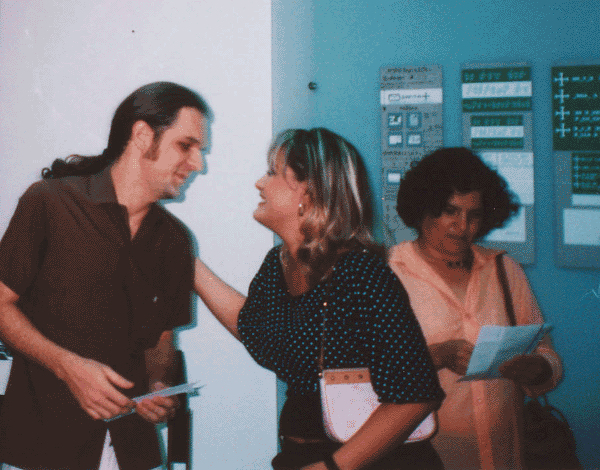
These images are from the opening of the exhibit Poetry contemporary Bolivian held at the 7th International Book Fair in Santa Cruz, from 31 May to 11 June. Participated in the same writers, Homero Carvalho, Benjamin Chavez, Vadik Barron, Blanca Elena Paz and Rafael Bautista S. Also attended Roxana Moyano, director of Centro Simón I. Patiño Santa Cruz and Peter Lewy, Chairman of the Departmental Chamber of the Book of Santa Cruz.

The meeting was magnified by the voices of the public to read, everyone at once, a verse of "999 Love Poems in unopened envelopes, Benjamin Chavez.

Get your own - Open publication

Saturday, May 6, 2006

I Am Married Should I Claim Zero

TEXT PUBLISHED IN THE CATALOGUE-ANTHOLOGY

this embrace as soon as text
BUSINESS WITH THE LORD K
By Rafael Bautista S.

A poem? That was a standard response (also of those who read). What triple was a surprise departure: people, plastics ynosotros (the squad). The plastics were four: Marcelo, Laura, Marcia and Marcela. We were erratic and the surprise came from our side, but, as Don K (aka Juan Carlos Ramiro Quiroga), one could read out the text.

plastics proposal was simple: remove the poetry of a strictly textual. At first I thought another one of those postmodern extravaganzas, from time to test yet (as in sex), but no longer is around to prove, and had for you to enjoy some unsuspecting (like us) that all he had done was to write poetry.

But it became something else (which was something because it was plastic, they did everything with it.) And I must admit that the surprise I went to the expectation: there what else happens? Then I brought the experience was, in my case, welcome, I do not know if that was calculado.Fue grata for two reasons, because apart from the experience that gave us the plastic (I know not like but not how to tell) accompanied us another, who handed themselves convened in parallel to the event. There could have left a notebook of memories, with a first chapter entitled: The day the poet was sad, and a narrated epilogue that abandonment foamed in the cabins. But let's get what we have. Le

I agree with Don K. Entrenched resistance wake. And those who attended the beginning we should have understood that our acceptance otorgabales the right to them (the plastic) to un-do what was done in the paper. Because once that the making out of our "privacy", it has to face the world alone (as a soldier), for that one you saw and gives the blessing to go to the world and no longer depend more on our skirts.

All reading is an interpretation and what they were doing was this: a (more) reading, and whether they could be said that our of otrosmodos because they were nothing more than confirming the importance of senses offering a text. The uproar was partly that, the sustainable prey snatched the "immaculate intent" so-called poetic, but not to exaggerate, final porqueal clerks realized that poetry is not as pristine and virgin as sacred as a people. But the uproar was because, once understood the question, who we were to discuss the matter, we already lining up in the chingadera that, for we were so excited because the thing we opened other possibilities and we came in late (or with glasses).

So I think they caught prey sustainable plastics then (Up to and we tuteaban and sent us to throw the company) because we no longer could contain (that is to offer new toy a naughty child) and we were that we carried with all (until Vadik Gregorian chant was made) until that we stay over.

But before we dropped the curtain, I took what I could: the book of Homer Azuela Pancho these lines: "There are a hundred in the afternoon / today meet all worlds at once", the words Anabel, the patience of Marcelo and Laura, who is the woman who earned 1000 poems?; questions Emma, \u200b\u200bballoons, a bug that led to the chance meeting of an accordion and a Oruro which proved to be Moscow, the absence of some, the boys of "Fine Arts" and "De la Sierra", which made me search the memory the meaning of poetry: poetry is the flag of a people worthy dreams ( maybe that's why neoliberalism was so bad poetry), and flying back to me when I was happy August 1st. Don K

brought us, in his heavy suitcase, which had lost flying high in the sky beyond. And gave us clues about how everything happened, "while the astonishment of the Flemish / trimmed in red sunsets." His flying made me realize why the stewardesses are all so beautiful: it is the charm that brings the lightness. Could not best sing these lines but plagiarizing his voice (that of Don K) grandfather tired leaving the dream to tell a story to the grandchildren, "some straws wrapped in spider silk." And, forgetting Santa Cruz (in her stunning looks and lights that give more shadow than light) from the air, the flying thought he had done, that I had gone, never taught me because I never wonder (only now ) knew that a flyer should be done "to the astonishment of flamingos."


Around 2 am, after the nationalization
rafaelbautistas@gmail.com

Sunday, April 23, 2006

Why Does My Shoulder Hurt After Lapariscopy


born in Tarija, 1978.


fall off the walls of the house
my name

points
name of my house

I have no permission to talk

why I cry

gestures acted

bribe to the words:

I make masks
the graffiti
the disguise of monsters warriors
drivers
train

taught to handle weapons
I've never seen
(do not know how to write)
the bribery
(the challenge to make bullets with phrases
Iron
to say
gunpowder and ignite )

the
forced to kill and do not let them

back to _mí
without a corpse

(have to learn to write with other letters dead
and say kill from a Last murderer)

words

return to consummate
crimes but the dead

non-understand-our-language
and do not die and do not die

and do not die

do we need a hand to translate?
"a mouth kiss?
a house without walls "?
incorruptible "a name? "Move? "Deaf?


need to rid ourselves from a foreign language to communicate


but I'm going to keep making up
'm going to keep denying
I will keep my words betray

and other

I will continue
because I know nothing
and Snapper

I will continue
because I knew all
because I know nothing

because (re) I know my duty

because I completely destroy

the world


to re-enter

it

Wednesday, April 5, 2006

Male Masterbation Househould Lube


ROOT
17 TO 21 APRIL
FLOOR
19.00 hrs Opening

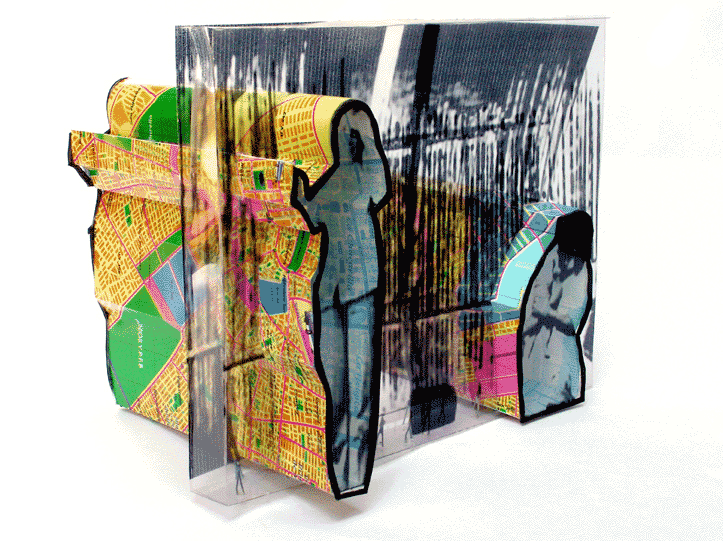
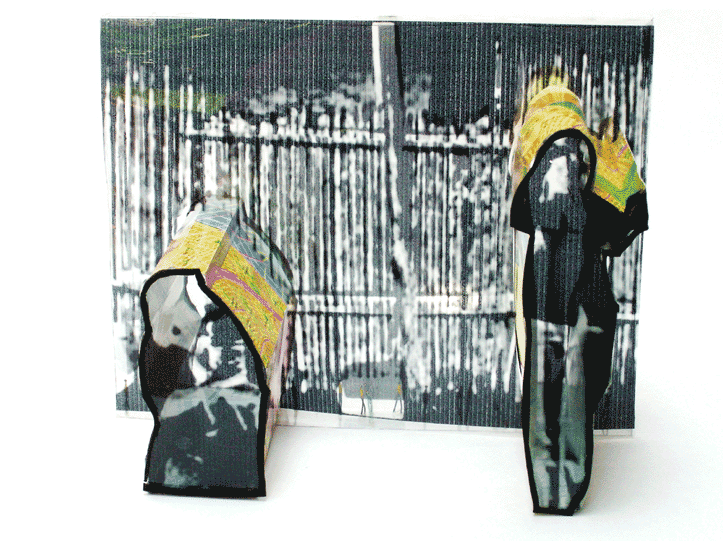
The sample of students in the Three-Dimensional Art Workshop School of Art, Foundation Open Door Nur University, proposes a variety of approaches to issues of space in a framework of formal experimentation.

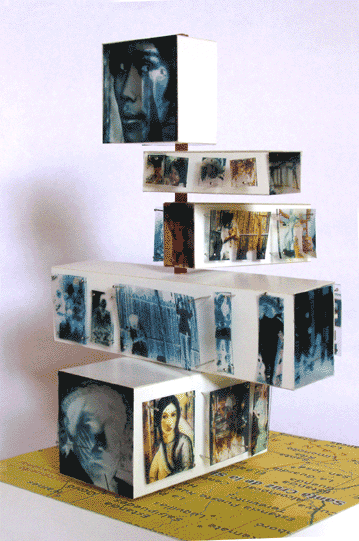
The workshop, led by Marcelo Santorelli, ushers in its own way of content and technical choices. Through ROOT, young artists allude to a link to the origin of their ideas.

Monday, March 27, 2006

Full Head Weave Side Bang

African party in 3000

The Alliance Française as part of their celebration for the day of the Francophonie, and the National Theatre School organized "Walk for Africa", a move party that took place on Saturday 25 March the site of the National Theatre School (Plan 3000).
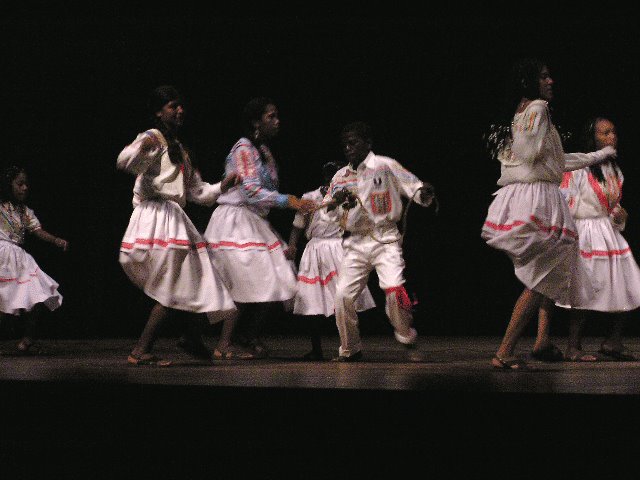
Despite the rain the meeting was concurridísimo. Music was the bond that united them all in a dance without a break. Afro-Bolivian group played several tracks, and won a large audience did not leave to withdraw from the scene without offering more and more of his rhythm and joy.
In an informal atmosphere, adults and children enjoyed music, dancing, food, and literature. With free activities such as drawing and painting, clowns and twisted, the party that started at 15 and lasted until 21, was developed in greater harmony.

Monday, March 13, 2006

Nj Gay Day Cruise Spots

I plan national forum to promote book , reading and libraries

Organized by the Centro Simón I. Patiño Santa Cruz, on Wednesday March 15th I started the Forum Formento National Book, Reading and Libraries on the premises of the cultural center (Independencia esq. Suárez de Figueroa).
As part of the actions and activities that the Centre Simon I. Patino of Santa Cruz provides for "Reading Campaign 2006 - Many Worlds, Other Stories", invites the community to reflect on the importance of books, reading and the role of libraries. Participate
Forum personalities from academia, government and private, for three days who will discuss different topics related to the development of a promotional polícita reading, the need for training and updating of professionals, as well as discuss the role of different institutions in promoting books and reading.
The Forum will feature lectures and workshops open for which you must register in advance. For more information: 337-2425, Ms. Isabel Padilla.

Thursday, March 9, 2006

Rotate Quick Time Player

poetry: 2004 Postal

Homero Carvalho hPor

Luís Andrade: brief, clear and precise, the poems of The Doors, open (or closed) to spell the words to reveal immemorial landscape poetry and lead by strange places steeped in the atmosphere almost always pathetic everyday. Here Homero Carvalho has been able to decipher metaphorical and evocatively the condition of those primordial objects, imagined or not-tend to lead to the discovery of secrets and unexpected areas of the elusive reality ...

XI
Invisible

From Oblivion Gate Close

Among
step Resentment
eternal And love ephemeral. XII


Before sunset
The Golden Gate of Paradise

Florentine bronze light bounces mortals.

Monday, February 13, 2006

Aetna Insurance Online Payment

doors and participation


postcards printed in 2004: Claribel Caton, Roberto Unterladstaetler, Alfredo Román


Postal The call Art. Santa Cruz 2004, aimed to promote cultural and artistic activities in the city. Thanks to everyone who participated in the call, the sponsors and those who collaborated in reporting, coordination and preparation of the sample failed to meet the printing and distribution of 5,000 postcards.

The jury, formed by the sponsoring companies ( AeroSur, ABC Color, Municipal Government of Santa Cruz, Pinturas Monopol and UPSA), selected jobs: 1. Claribel Catoira 2. Roberto Unterladstaetler 3. Alfredo Román 4. Sivila and Juan Pablo Pablo Fernández.
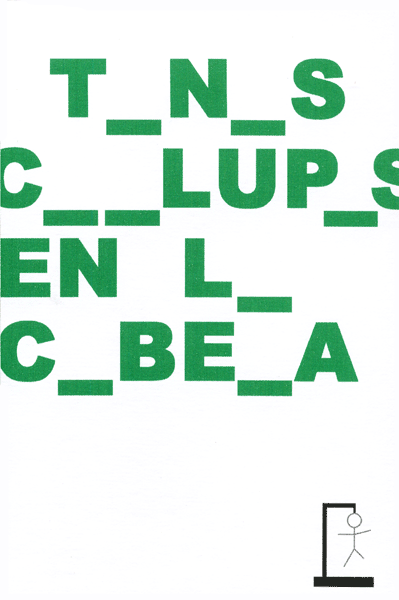
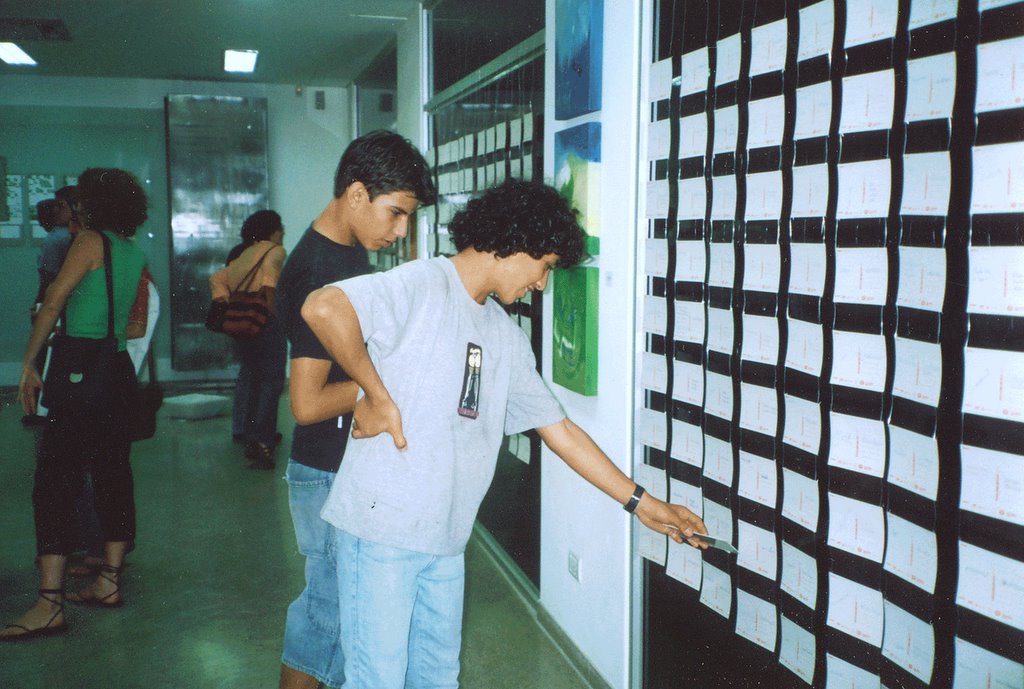
These works, and others go up, were exhibited at the Centro Simón I. Patiño - Santa Cruz on September 20, 2004, and within one week.

Participating artists: Valia Carvalho, Clarissa Caton, Chullpa Cucaracha, Lamber García, Viviana Guiteras Kuncar Mariel, Monica Murillo, Fernando Pérez, Ernst Carmen del Pozo, Alfredo Román, Ramiro Sanchez, Marcelo Santorelli, Paul Sivila, Roberto Unterladsteatler, Roberto Vaca, Atilio Valdivieso and Roberto Vaca.


Thursday, February 9, 2006

Shaved Cock Female Doctor


For
Clemente Padin Edgardo Antonio Vigo

is no doubt that every work of art or poem demands audience participation or reader. This phenomenon finds Umberto Eco (1984). If ambiguity, ie, the diversity of meanings in the artwork, is the note that precisely defines its artistic character, then all work is necessarily "open" in the sense that it offers several interpretive options. This is true in all cases as the work remains intact, ie remains the same. This is possible because each interprets according to the sum of knowledge and experience that has, hence the variety of interpretations. Still, Eco himself noted the existence of two types of works. On the one hand there are those that:
.... We proposed an "opening" based on a partnership theoretical, mental user, which should be interpreted as an act of art produced, and organized as a structural full employment (even if it is structured so that it is endlessly interpretable.)

Also there:

... a more restricted category of works which, by their ability to assume different structures physically unrealized unforeseen, could be defined as "works of art"

As we shall see, a good sector experimental poetic production in Latin America, according to this characterization of Eco, fall squarely within the group "works in motion."

CONCRETE POETRY

The origin of this phenomenon came about around 1956 when he made the first exhibition of Concrete Poetry in Sao Paulo and Rio de Janeiro. Three streams converge there explored by Alvaro de Sá: Noigrandes group of St. Paul, known as the structural rigor, the symbolic language of metaphysical Gullar Neoconcretism would lead to the language and mathematical Wlademir spational-Dias-Pino would lead to Semiotic Poem and the Poem / Process. In the last two instances where it is most appealing to the participation of the "reader."

Neoconcretism

Thus for Gullar theorist Neoconcretism, the art object is an entity entelética not materialize as perceived target, a "Nao-object." That is, while the poem is not read or eat, does not exist. Reader participation, in relation to the poem, it is imperative for the purpose of making real communication: this requires the reader to "act" on the text. For this neoconcretism poets as Ferreira-Gullar, Theon Spanudis, Osmar Dillon and others make use of the poems-objects (poems in which there is no substitute support entail the loss of information), objects in the form of books or boxes where the folds, uneven pages, colors, perforations, overlays, etc. act as attenuators / triggers poetic information. So, Ferreira-gull, to arouse the reader's participation as co-manager and updater of the poem and set the time as a privileged life in which it decided the transcendental experience of non-object, is laying the premises of art and poetry of the following years, especially, the trends that would popularize the Conceptualism.


OSMAR DILLON: Unfolding Object-Poem

THE POEM spational

Wlademir Dias-Pino, promoter spational mathematical trend of Concrete Poetry in 1956 and works proposed in this character as the object-poem "A Bird", a book that can "read" if handled, that is, if the "reader "operating in the pages looking for information in the text. This is a poem in which the physicality of paper, its texture, transparency, its accidents (drilling and roughness) and the various possible combinations of the texts inscribed (in the pages flip and exchange) require proactive and attentive reader. Net differences not only points to trends and current Noigrandes Ferreira-Gullar Neoconcrete within Poetry Specifically, to define the poem as a physical entity (not abstract) but also involves a formal progress in expanding the field of reception. That is, requires a real involvement / social (not just abstract / individual) of the receiver.

Wlademir Dias-Pino: SOLID, 1956 - SOLID, spatial version, 1962

Almost in the same vein, the poem SOLID, exhibited by Dias-Pino in first exhibition of Concrete Poetry, not only allows for transposition verbal semiotics of signs used in the poem but also invites participation the reader to offer the possibility to recreate the poem according to the system of sign language you want or you can use in your version.

semiotic poem
Semiotic Poem: LUIS ANGELO PINTO


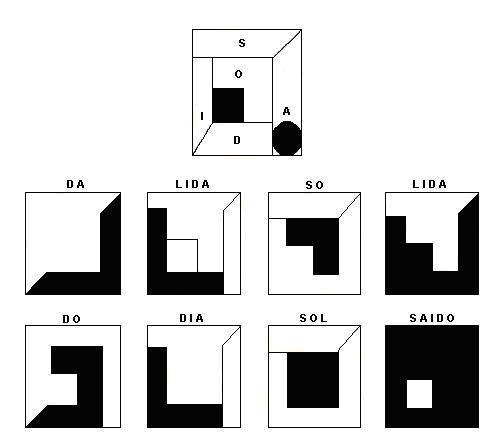
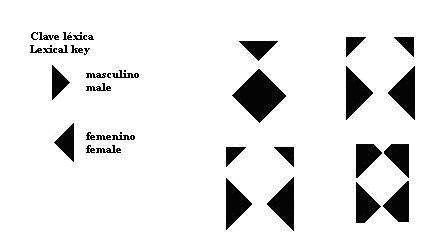
SOLID, going to space formulations, opens the door to later developed Semiotic Poem (1962) by himself Dias -Pino and, later, in 1964, São Paulo Decio Pignatari poets and Luis Angelo Pinto (1965). The Semiotic Poem replaces the meanings of words shapes. This will display the corresponding figures with significance set by a "key lexical" or "dictionary" of the proposed new visual language. Configurations or formations of figures are the poems to read.

The next step was to move from its privileged position to verbal language (as the only source of poetic expression) and allow all the languages \u200b\u200b(including verbal language, of course) could take the responsibility. Here too, the participation of the "reader" creative "is decisive. Note in this Poem Semiotic Neide Sá, belonging to the second stage of movement, in which the translator code elements define not only icons but also participate in Text:


Semiotic Poem: NEIDA SA

one hand indicated the linguistic code imposes some reading, but the reader, to manipulate and alter the orientation of the figures, also alters its significance and therefore the text. On the other hand we can see how certain expressions that have no place in the verbal language, as eg, the word "know", "flavor" and "see" that would give rise to the term "flavor do know" that no specific formulation in verbal language, do have a level of visual language. The meaning of the poem depends on the active participation the "reader."

POEM / PROCESS

By 1967 at the inception of the Epic / development process as natural quasi Semiotic Poem, such participation was officially incorporated range of formal proposals, with the name "version", ie the creation of the poem to the reader operating on the "matrix" or poem draft agreement to their repertoire of knowledge. The release comes as a solution to the consumption of the unique work (an expression of privileges) and allows the "reader" operate on the poem that he proposes creating for itself, different versions. The poet, now, just enough for him, the way architects, describing visually or verbally poem project leaving it to the "reader" to materialize.

NEIDA SA: Transparencies

Certainly, reading the "project" will generate the "versions" via participation of the "reader", according to materials available in every time and place particular. This frees the poet to "update" the poem without the fear that the new media, which necessarily will discover science and technology, might prevent its realization.

FOR POETRY AND / OR MAKE


These formal developments of Brazilian poetry edge could not fail to exert great influence in all spheres of art, poetry and related disciplines. So in Argentina, Edgardo Antonio Vigo, who, after speaking of the Poem / Process as a "poetry to build", ie, a poetry that requires the participation of the reader but following the outlines of a "programmer" or "projector process, "goes one step further by proposing a program that gives certain instructions (signals or tracks) to the reader and this, the real" constructor of the poem, "who will bring life to the poem. In his own words, "... the possibility of art is not only the participation of the observer but activation constructive. "(1970).

The new" reader "or" true creator "receives a modified project through creative participation. These ideas were embodied in the day on September 30, 1970 in University Hall the Republic, Montevideo, Uruguay, as part of the Vanguard Publishing Exhibition, which was the work of Edgardo Antonio Vigo "poem demagogues." Each participant was given a form with the project to be undertaken:

"Place, talking anonymity, a phrase, phoneme, symbol or visual (etc.) necessary for you in a poem in this space. Make a tube and insert it into the URN No. 1. Receive certification of the vote in the form of a card to be hanging from his lapel. Thanks "

Each participant, upon action on the white form, introduced in a special box with a round hole (not homer as the current polls). The day was completed with the work of Clemente Padin" Poetry must be made by everyone "in which participants acted on a blackboard which hung ribbons and white papers. Each one gave them a circular which stated:

" DIRECTIONS: Type in a verb blank ballot infinitive to express its need for action at this time. Then you nail in the sees fit, so that the verb is hidden by the ribbon. At the end of the poem, the organizers stick horizontally blank ballot so that it can be read, depending the color, and so will the pattern of concern at the collective level and plastic concrete poem, along with others, has contributed to create. "
It not only creates consumer actively according to the project but that does not individually depending on the version that deserves the solitary act of consumption but does so collectively. In the expectation of concrete and Visual Poetry through participation Poem / Process the creative construction of Poem-Making. Modification operating on the mode of artistic production and, consequently, the mode of consumption. "The most profound activation of the individual: the performance by him of the poem." The key proposal is about the modus operandi, the mode of production and consumption, not the work or product, which does not prevent it be altered unpredictably by the mode of production triggered (1971).

It is enlightening to note Vigo Expo / International Proposals to Perform at the Centre for Art and Communication (CAYC) Buenos Aires, Argentina, in 1971:

"The next June 18 will open this exhibition. All those present today whose history of having been made by artists from the field of visual or sound poetry. These two camps have been reactivated constantly searches performed internationally and have dropped (almost entirely) the treatment of poetic and visual level, as well as traditional venues, both in its presentation (exposure) and development (book .) Accumulated experiences and allow them the proposal.
At the time of the liberation of the camps in the traditional arts are divided into genera, but not advocate a total art, research POETIC remain within that field, it comes from all imponderable that indefinable "mysteries to unravel" as well as traits may notice a "contemporary romance" as defined in their form and conjugated differently. The exhibition has been organized by Edgardo Antonio Vigo, with the direct collaboration of Elena Pelli (Resistencia / Chaco) and Clemente Padin (Montevideo / Uruguay RO).
To maintain consistency within the presentations of projects and some of his works have started from the PROCESS / POETRY, movement in Brazil breaks the hegemony that until about 1969, kept the NOIGRANDES GROUP (concrete poetry) in San Pablo. The POETRY / process innovation brings the possibility of active participation of the observer, to those who provide "minimum key" you are welcome and encouraged to shape the final content of the poem partly or proposed. It also adds to this the possibility of a constant change of the result (by the intensification of public and individual participation), it becomes a "NUNCACABAR" of the poem. Later there is a movement across the world, where the poetic investigations are proposed but not realized. It
the possibility of exchanging ideas, concepts and projects and free of the poetic object (dear to the Surrealists with his variation POETRY / objectives and proposals for the first theoretical notes of poetry / process-Wlademir DIAS-PINE-) as the final outcome and necessary so far. The completion of planned work may be made by a wholly away from the developer or researcher. "

this fragment also note Edgardo Antonio Vigo (1971) describing his project A VISUAL WALK TO THE PLAZA RUBEN DARIO:

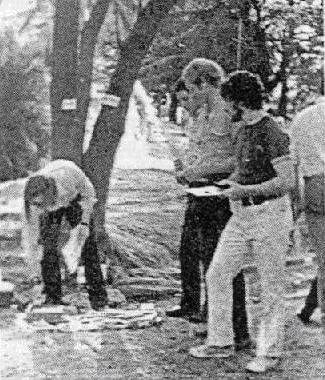
"A Card indicating a minimum key and an element (which may be substituted), invites us to perform an act that we can simply modify the other. Based on his reading, the realization of our own act. Explain: take a piece of chalk, mark a cross (or any other geometric center or not) within the center or around it to make a 360 º (which may be smaller or plural), add a variant on the horizon, we can change by standing on tiptoe or squatting (why not come down and support our body literally on the floor), with any of these possibilities and exercise You have made VISUAL WALK TO PLAZA RUBEN DARIO (designer : EAV, Buenos Aires, CAYC, 1970). The absence of the work, need not be present, the ephemera of the room, open to the possibility CONSOLIDATED ACTS dissimilar to those proposed makes us all into makers (read traditionally creator) of consumer situations and not typed a priori. "


EDGARDO ANTONIO VIGO : "A Walk Along the visual Ruben Dario Plaza, Buenos Aires, 1970.

POETRY INOBJETAL

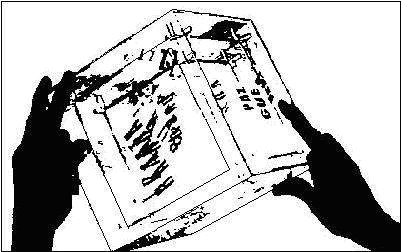
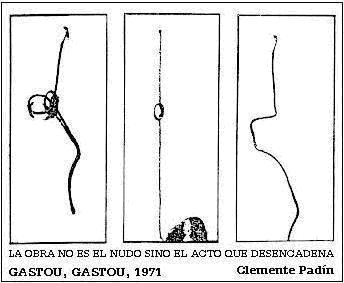
Clemente Padin's ideas had already materialized in some works published in the magazine OVUM 10, as eg "Gastou, Gastou" and "In Hoc Signo Vinces" in which the reader was urged to act on the poems. Thus, by 1971, made a poetic action which he called Poetry Inobjetal. Please note that in those years (late 60s.) are attending a unanimous questioning the fundamentals of the language, particularly verbal language, which is considered a source of all information deformations via ideology, and another agent system for the subjugation and control of society. So it was not strange that this proposal Padín utopian attempt to set aside the language of "representation" characteristic of the verbal and other languages \u200b\u200bthat their meanings conventionally established by social consensus to propose a language of "action", signs "to act, to say. " That is, proposed to replace the signifiers for the actions and meanings for the consequences of action and senses awakened. Of course, the "makers of texts" in this particular language, for the sake of "doing" would be participating and while creating the "poem of action." The downside of this proposal, as he himself admitted it Padin (1975), is that, for there must be communication languages \u200b\u200band the "actions" had not been inventoried or conventionalized to the point that each of them you could attribute a meaning (except for a small number of which by custom have been given a sense as eg, giving flowers express "love", etc.). In addition, the "readings" of the actions modulated by the degree to which affected the interests of "readers" depending not only on the repertoire of each other, but their expectations social.

Clemente Padin "Gastou, Gastou" 1971.

POESIA SONORA GESTURAL HYPERTEXT ASSEMBLY AND / OR MAKE

had to wait until 1996 to find "beyond" the proposals to the poetry of the participation of the 60s. we have discussed. The Argentine poet Fabio Doctorovich Paralengua Group of Buenos Aires, applying the dynamics of new media gives the "reader / active participant" to express themselves through different media: sound, gesture, movement, etc. , expanding registration of expressive possibilities. After recognizing the contributions of Vigo and Dias-Pino and analyze the monoconceptualidad of almost all of the poetic production of the century, ie strictly vehicular decoding a single channel by proposing the plurality of ways of expression, the Poem Multiconceptual, as is, moreover, it has assumed experimental poetry today to take advantage of all the dimensions of language, not only the semantic level but also the sound, the visual, performative, etc..

In his theoretical formulation, expressed Doctorovich (1998):

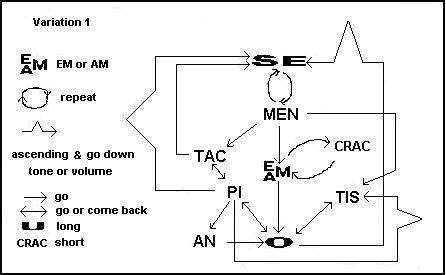
"An application of multi-tenant could be production works to work various components (textual, visual, sound, etc.) separate parts would join interrelated in the manner of a modular structure. Each module, unlike the multimedia or audio would not necessarily be represented simultaneously with others. This would give the character of a modular work "work to build" because the reader could arrange the modules in different sequences possible or add your own modules, creating a multiplicity of readings. In order to ensure that the work is a single (albeit divided) and not the mere sum of its parts, and to address one or more common topics, modules should have parts that work in the manner of interlocking pieces, being the most obvious example of this technique intertext in which the B module would be used phrases that would refer to the module A.

Doctorovich FABIO: Gesture / Hyper-textual poetry to Build and / or to Carry out 1.

As we see, the poem is divided into components that depend on the dimension of language that is called (semantic, visual, aural, etc.).. The difficulty is how to bring back those modules into a single entity. In a poem the mooted verbal SOLUTIONS especially copulative conjunctions, in the visual poem, the space itself, in the phonic poem, time, etc. The proposed Doctorovich, the modules are "built" according to a "hypertext syntax (" hiperpostipográfica "as the flame). That is, viewers (inset) is not only meaningful but each module also articulated by the whole. Finally, the latest twist, the work itself ceases to be a permanent body, as:

original designer must take care to outline a plan (bi-, tri-, or n-dimensional) of the work to serve guide to future authors and also indicate the spaces fill (modules or pieces done.) Thus, the work becomes a dynamic entity, consisting of assembled parts that can be embedded or disengage a piacere. Also the concept of "artwork" would disappear because now we would be "a form metamorphic, jelly, a" blob ", consisting of real and virtual materials."

We are aware the influence of the newest media, especially computers, in the proposed Doctorovich. Adapt the expressive instruments while he lives is, without doubt, the challenge that poets never refuse. In addition, the media have always "contaminated" and influenced the forms. Therefore, technological advances, especially in the field of expression and communication, have always led to formal changes, either in the works themselves (adding an excess of information), whether in the pattern of consumption.

Doctorovich FABIO: Gesture / Hyper-textual poetry to Build and / or to Carry out 2.

CONCLUSION

Newest born from the old (O patently obvious guys!). Since "everything that will produce the human being can be art" of Duchamp's "everything that can be heard can be music" of the assertion Cage Beuys that "anyone can be an artist," everything comes together the great contribution of the historical vanguards, especially of Dadaism: "Art is life." And life is dialogue, communication is social production. In proposing the participation as being with the art and poetry, artists and poets do not do nothing but reaffirm that art premises free of their status as consumer goods or products exclusive and subject to the laws of the market. In proposing the final product liability "consumer-active, the artist does nothing to return art to its original social function, the area of" use "means a product (not necessarily material) expressing symbolically their urges and needs ("Poetry must be made by all" the Count of Lautreamont). Participation has been the seamless thread that united every poem and every proposal of Latin American poetry in the second half of the twentieth century and, indeed, new media, especially electronic, they will do nothing but encourage interaction through they make possible.


Bibliography consulted

Cirne, MOACY Vanguarda: a semiological Projeto, Vozes, Petropolis, Brazil, 1975
DE SA, ALVARO Vanguard: Produto de Comunicação, Vozes, Petropolis, Brazil, 1977
DIAS-PINO, Wlademir A Ave, Ed Igrejinha, Cuiabá, Brazil, 1956. ----------------------------------
Solida, author Ed, Rio de Janeiro, Brazil, 1962. ----------------------------------
Processo: Linguagem e Comunicação, Vozes, Petropolis, Brazil, 1971.
Doctorovich FABIO ENCAszTERS in catalog VI International Biennial of Experimental Poetry, Section Cono Sur Latinoamericano, Montevideo, Uruguay, 1998.
ECO, UMBERTO Open Work, Planeta-Agostini, Madrid, Spain, 1984 FERREIRA-gull
Nao-Object Theory in supplement of Jornal do Brasil, Rio de Janeiro, Brazil, 1959.
PADIN, Clement of the Representation al'Action, Ed Polaire, Marseille, France, 1975.
Pignatari, Interview DECI Correio da Manha, August 21, 1965.
Pignatari, Deci and Augusto and Haroldo de Campos Pilot Plan for Concrete Poetry. In Noigrandes magazine, nr. 2, Sao Paulo, Brazil, 1958.
VIGO, EDGARDO ANTONIO Of Poetry / Process to Poetry for and / or Perform, Diagonal Cero, La Plata, Argentina, 1970. ---------------------------------------
Street: current art scene, magazine OVUM 10, no. 6.1971, Montevideo, Uruguay.

* Article published with permission of the author.